
Critical-Load Resilience
Support selected circuits during eligible outages with a properly designed transfer and controls strategy.
- Critical-load inventory
- Required backup duration
- Transfer and isolation design
- Commissioning and owner training
BrightOn Power plans ESS around a defined outcome: backup for important loads, higher solar self-consumption, load shifting, commercial peak management or a combination of these priorities.
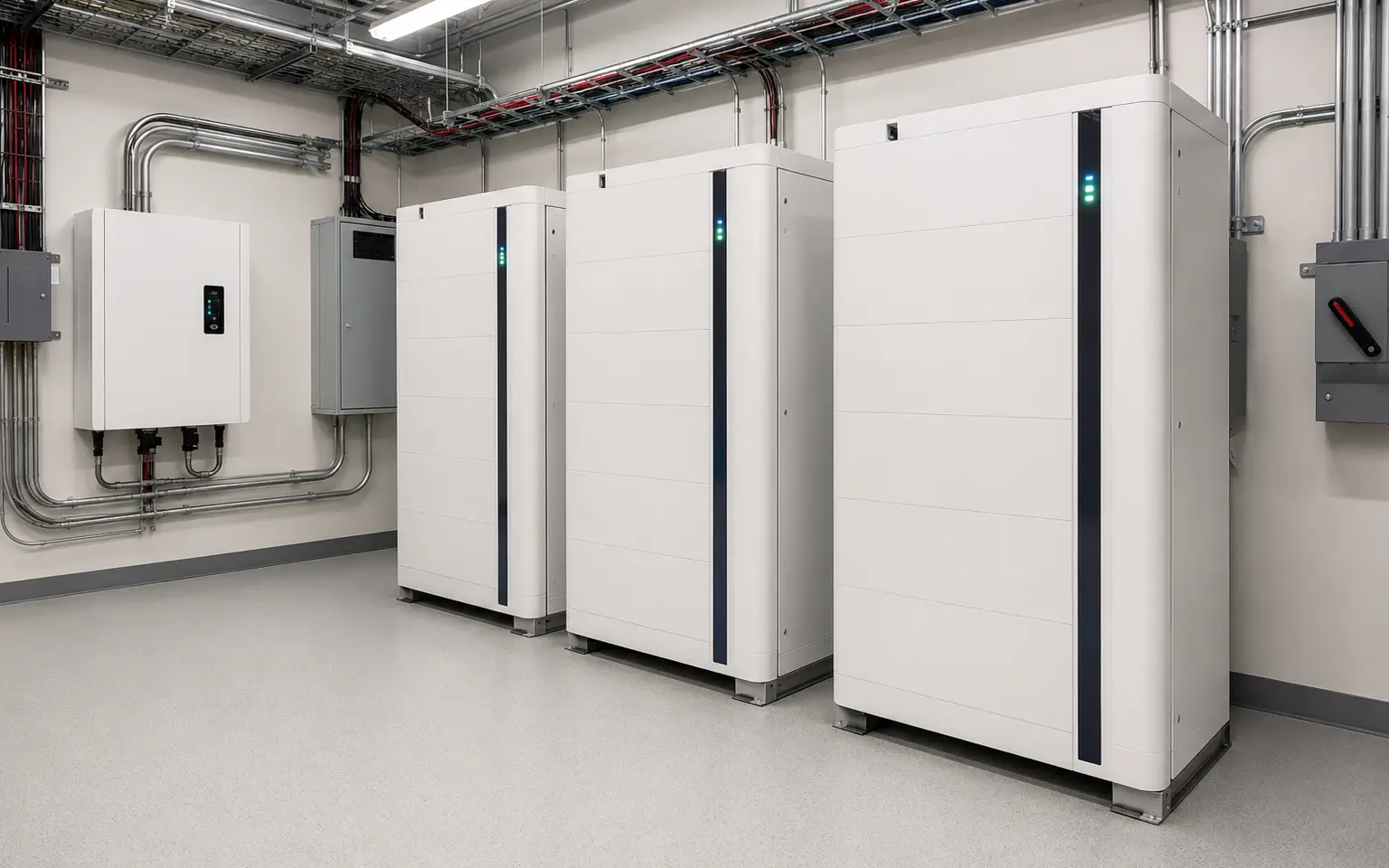
Power, energy capacity, controls, critical loads and electrical integration designed as one system.
The system is sized only after we understand what must be powered, for how long, and when the building uses the most electricity.
Support selected circuits during eligible outages with a properly designed transfer and controls strategy.
Store excess daytime generation for use later instead of exporting all surplus electricity.
Evaluate whether controlled battery dispatch can reduce short power peaks that influence demand charges.
Shift when electricity is drawn from the grid where tariffs, operating patterns and controls support a practical benefit.
Identify whether the priority is backup, self-consumption, demand management, load shifting or a combined operating strategy.
Review utility data, critical loads, service capacity, one-line information, equipment location and operating constraints.
Define required kW output, usable kWh capacity, expected operating profile and a high-level project budget.
Verify installation space, clearances, access, environmental conditions, conduit routes and integration requirements.
Coordinate electrical design, permits, utility requirements, fire and building considerations, and current incentive rules.
Install batteries, inverter and switchgear, then configure operating logic around the approved use case.
Commission the system, verify transfer or dispatch behaviour and train the owner or facility team.
Track alerts, energy movement and battery health, with reporting and preventive-maintenance options.
BC Hydro currently lists battery rebates when program conditions are met, including residential, commercial and multi-unit residential pathways. Battery-only eligibility differs from solar-plus-storage eligibility, so we verify the current rules before recommending a configuration.
For eligible businesses, stationary storage may also qualify under the federal Clean Technology Investment Tax Credit, subject to tax and program requirements.
A grid-connected battery must include the correct transfer, isolation, controls and critical-load design to operate during an outage. BrightOn Power defines this function before equipment is selected.
DEFINE YOUR ESS GOALTell us the property type, main energy concern and the loads that matter most.